
Top-rated independent heating and cooling across central Arkansas and the Arkansas River Valley
One Room Is Always Too Hot or Too Cold
One bedroom sits ten degrees warmer than the rest of the house, or the back room never warms up in January. You close vents, you crack a window, you run a box fan, and nothing sticks. We diagnose and fix single-room comfort problems across Arkansas, Louisiana, Missouri, Mississippi, Oklahoma, Tennessee and Texas. Start by making sure that room's vents are open and your filter is clean, then call us to measure what's actually reaching the register.
Call (888) 365-6280- A real person answers
- Open 7 days
- Written quote before work starts
Taking calls until 5:00 PM CT
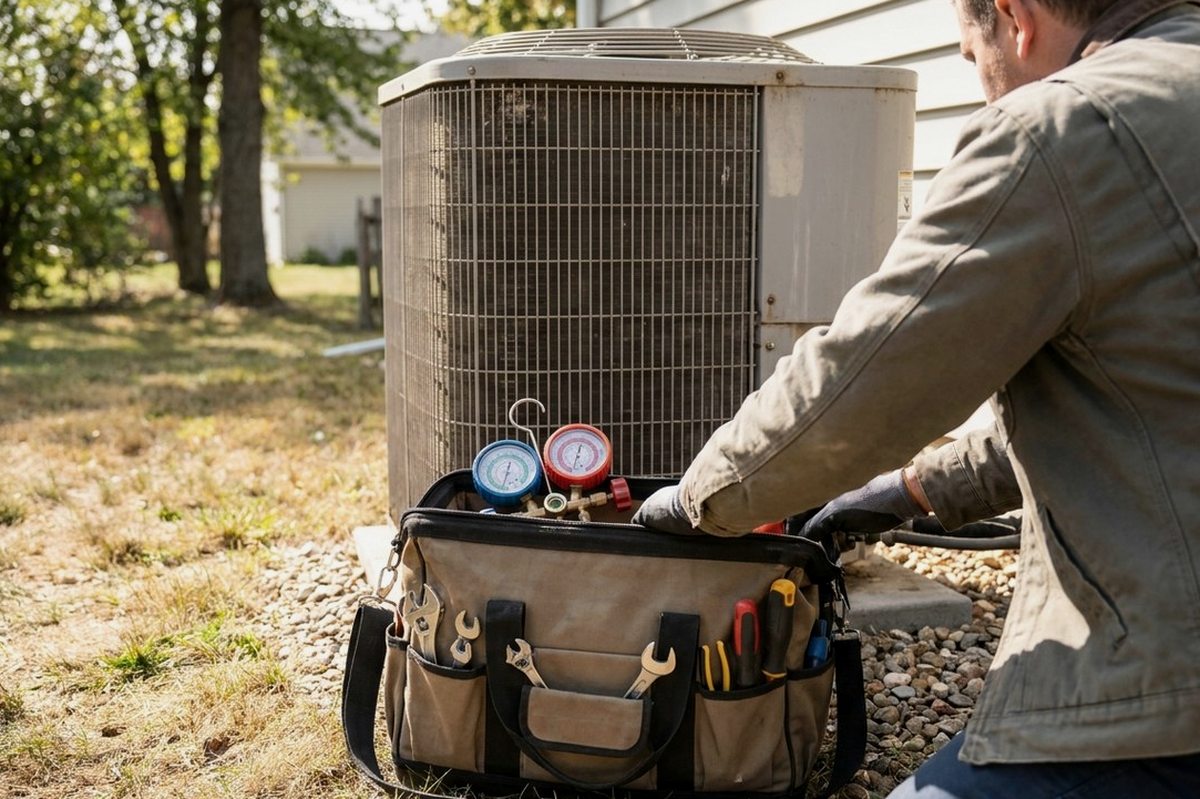
Rock City Air Systems service team · field-reviewed before publishing
Why one room drifts while the rest of the house is fine
Almost always it comes down to how much air that room gets and how much heat it gains or loses. A long duct run through a hot attic can lose a big share of its cooling before it ever reaches the register. Bedrooms over a garage, rooms with west-facing glass, and additions tied into an existing system with undersized duct all behave the same way. Add a crushed flex duct, a disconnected boot in the attic, or a return path blocked by a closed door, and you get a room the system simply can't keep up with. The thermostat in the hallway reads fine, so the system shuts off and that room stays uncomfortable.
Thermostat placement and why the system stops too early
Your thermostat only knows the temperature of the wall it's mounted on. If it sits in a central hallway with good airflow, it satisfies quickly and the equipment shuts down while the far bedroom is still climbing. Sun hitting the thermostat, a supply register blowing across it, or air leaking through the wall cavity behind it will all skew the reading. We check what the thermostat senses against real temperatures in the problem room. Sometimes the answer is relocating it. Sometimes it's a zoning setup or a smart thermostat with a remote sensor in the room that matters most to you.
What we measure on a comfort call
We start with numbers, not guesses. We take supply and return temperatures at the equipment, then measure airflow and temperature at the register in the problem room and compare it to a room that's comfortable. We check static pressure to see whether the whole system is choked by a restrictive filter, a dirty coil, or duct that's too small. We look at the duct run itself in the attic or crawlspace for kinks, gaps, crushed sections and missing insulation. We note window orientation, insulation depth above that room, and whether the door has any return path when it's closed.
The realistic fixes, from small to structural
The cheap fixes are real fixes when they match the cause. Sealing and insulating the duct serving that room, straightening a kinked flex run, reconnecting a fallen boot, or upsizing one branch often gets a room within a couple of degrees. Balancing dampers can move air away from over-served rooms and toward the starved one. If the room has no return path, adding a transfer grille or door undercut helps more than people expect. Bigger problems need bigger answers: a new duct branch, added attic insulation, zoning with its own damper and sensor, or a ductless mini split head for a converted garage or sunroom the main system was never sized to handle.
When it's an equipment problem instead
Sometimes the uneven room is the first symptom of a system that's losing capacity. Low refrigerant charge, a dirty outdoor coil, a failing blower motor or a heat pump stuck in defrost will show up first in whatever room is hardest to reach. If several rooms have gone downhill at once, or the system runs constantly and never satisfies, that's an air conditioning repair or heating repair question rather than a duct question. Safe things you can check yourself: thermostat batteries and settings, a tripped breaker, filter condition, debris around the outdoor unit, and open vents. Refrigerant, gas and high-voltage work is ours to handle.
One Room Is Always Too Hot or Too Cold — common questions
Should I close vents in other rooms to push more air to the hot one?
No. Closing vents raises pressure in the duct system, which increases leakage and can strain the blower. You may get a small change in the target room and cause bigger problems elsewhere. Balancing dampers set properly is the better route.
Will a bigger AC or furnace fix my one hot room?
Usually not. Oversized equipment short-cycles and runs less, which gives the far room even less time to get air. If duct delivery to that room is the bottleneck, a larger system moves the same restricted airflow.
Is a ductless mini split a reasonable answer for one room?
Often yes, especially for a converted garage, sunroom or attic bedroom the original duct was never sized for. It conditions that space independently without disturbing the rest of the house. We'll tell you if duct repairs would do the job cheaper.
How it works
- Step 1
Tell us the symptom
Call or fill out the quote form and describe what the system is doing. Warm air, short cycling, water on the floor, a smell, a noise. That detail tells us what parts to load on the truck.
- Step 2
We diagnose on site
A technician checks the thermostat, the electrical side, airflow through the filter and coil, refrigerant behaviour and the ductwork. You hear what we found in plain language before anything gets replaced or repaired.
- Step 3
You approve the fix
We explain the repair, what it costs and what happens if you wait a season. Nothing gets done without your go-ahead, and we tell you honestly when a repair no longer makes sense.
- A real person answers
- Open 7 days
- Written quote before work starts
Why homeowners call us
- We know humid-climate systemsAcross the region the real enemy is moisture. Systems here run long hours pulling water out of the air, and that shows up as frozen coils, clogged drains and mildew smells. We diagnose for humidity, not just temperature.
- Mixed gas and heat pump workPlenty of homes we visit run a heat pump with gas backup, and the two have to hand off cleanly. We troubleshoot both sides, including defrost boards, reversing valves, ignitors and heat exchanger concerns.
- Attic ductwork is our daily breadMid-century homes often have ducts running through attics that hit brutal temperatures. Crushed runs, disconnected boots and leaking joints steal cooling before it reaches the room. We find them instead of blaming the equipment.
- Repair before replaceA capacitor, a contactor, a blower motor or a clogged drain line fixes a lot of the calls we take. We would rather fix what you have and tell you plainly when the numbers stop working.
- All major brands, gas & electricFrom Carrier and Trane to Lennox, Goodman, Rheem and Bryant, serviced independently.
- Straight answersNot worth fixing? We say that out loud, and often it saves you the visit fee.
About this guide
If the safe checks didn't fix it, the fault is real
Bring your notes from the checks to the call and booking takes no time.
- A real person answers
- Open 7 days
- Written quotes
- All major brands
- Gas & electric
Rather not call? Get a free quote →