
Top-rated independent heating and cooling across central Arkansas and the Arkansas River Valley
Water Pooling Around the Furnace
You walked past the furnace and saw a puddle on the floor. Maybe a damp ring on the concrete, maybe water tracking toward a drain. Water around a heating system almost always comes from condensate or drainage, not from the burners themselves. We handle heating repair and furnace repair across Arkansas, Louisiana, Missouri, Mississippi, Oklahoma, Tennessee and Texas. Shut the system off at the thermostat and call us.
Call (888) 365-6280- A real person answers
- Open 7 days
- Written quote before work starts
Taking calls until 5:00 PM CT
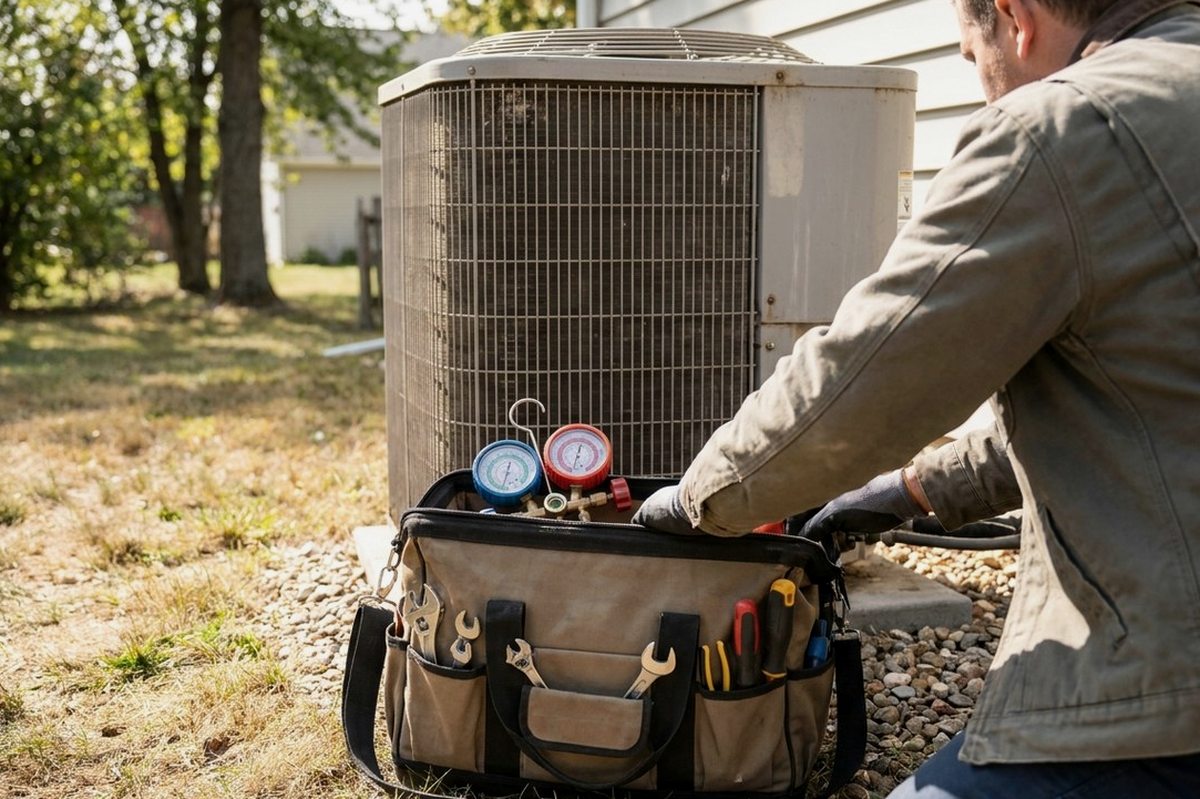
Rock City Air Systems service team · field-reviewed before publishing
What a puddle by the furnace actually tells you
Water on the floor means liquid is being made or moved nearby and something is not carrying it away. High-efficiency furnaces pull so much heat out of the exhaust that the flue gas condenses into water, and that water has to drain. Older furnaces do not make condensate, so a puddle under one usually points at the AC coil sitting in the same cabinet, a humidifier, or a nearby plumbing line. If you smell gas or a rotten-egg odor, or a carbon monoxide alarm sounds, leave the house, call 911 or your gas utility from outside, then call us. Otherwise, turn the system off and stop the water from spreading.
Cause one: a clogged condensate drain or full pan
This is the most common and the cheapest to correct. Condensate lines are narrow, and in our humid summers they fill with slime, dust and rust flakes. Once the line plugs, the drain pan under the coil overflows and water finds the floor. A condensate pump can also fail or its float can stick, so the pump sits full and backs up. Symptoms line up with this: the puddle appears while the system runs, it comes back within a day of being mopped, and the water is clear with no smell. Clearing and flushing the line, then checking the pan for rust holes, usually settles it.
Cause two: coil, humidifier and flue problems
If the drain is open and water still shows up, we look upstream. A dirty evaporator coil or a low refrigerant charge can ice over, and when that ice melts it dumps more water than the pan was built to hold. Whole-house humidifiers mounted on the ductwork have their own water feed and drain, and a stuck fill valve or split saddle line will leak steadily even with the furnace off. On condensing furnaces, a cracked collector box, a plugged inducer drain port or a sagging flue can send condensate into the cabinet instead of the drain. Those are cabinet-open repairs, not homeowner work.
Cause three: attic ducts, sweating and outside water
Plenty of homes across the region have the air handler and ducts run through a hot attic, and that changes the picture. Cold metal in humid attic air sweats, drips down the plenum and stains the ceiling below or runs down to the unit. Poor or torn insulation on the supply plenum makes it worse. In a garage or basement install, water can also come from somewhere else entirely: a water heater relief line, a washing hose bibb, or rain tracking in along the slab. Follow the wet trail to its highest point before assuming the furnace did it. Sometimes the heating system is only the low spot on the floor.
What you can safely check, and what we do differently
Safe for you: change a dirty filter, confirm the breaker for the system has not tripped, check that supply and return vents are open, clear leaves and debris away from the outdoor unit, and check thermostat settings and batteries. Turn the system off if water is still coming. Do not open the burner compartment, touch the gas piping, or go after refrigerant lines. When we arrive for air conditioning repair or heating repair, we pull the coil access, measure static pressure and temperature split, vacuum and pressure-test the condensate path, check the secondary pan and float switch, inspect the collector box and inducer drain, and read refrigerant pressures to see whether the coil was freezing.
Water Pooling Around the Furnace — common questions
Can I keep running the furnace if there is water under it?
We would rather you shut it off at the thermostat. Water near electrical controls, the blower motor and the control board can cause a short or rust that costs far more than the original drain repair. Mop the floor and call us.
Why is there water under my furnace in the summer?
Because the evaporator coil for your AC usually sits in the same cabinet or the plenum right above it. Summer condensate is normal, and a puddle means the drain, pan or condensate pump is not moving it out.
Is condensate water from a furnace dangerous?
It is mildly acidic and can stain concrete or corrode metal over time, but the bigger concern is where it lands. Water sitting against wiring, a blower or ductwork causes rust, mold growth and electrical faults, so it needs to be drained properly.
How it works
- Step 1
Tell us the symptom
Call or fill out the quote form and describe what the system is doing. Warm air, short cycling, water on the floor, a smell, a noise. That detail tells us what parts to load on the truck.
- Step 2
We diagnose on site
A technician checks the thermostat, the electrical side, airflow through the filter and coil, refrigerant behaviour and the ductwork. You hear what we found in plain language before anything gets replaced or repaired.
- Step 3
You approve the fix
We explain the repair, what it costs and what happens if you wait a season. Nothing gets done without your go-ahead, and we tell you honestly when a repair no longer makes sense.
- A real person answers
- Open 7 days
- Written quote before work starts
Why homeowners call us
- We know humid-climate systemsAcross the region the real enemy is moisture. Systems here run long hours pulling water out of the air, and that shows up as frozen coils, clogged drains and mildew smells. We diagnose for humidity, not just temperature.
- Mixed gas and heat pump workPlenty of homes we visit run a heat pump with gas backup, and the two have to hand off cleanly. We troubleshoot both sides, including defrost boards, reversing valves, ignitors and heat exchanger concerns.
- Attic ductwork is our daily breadMid-century homes often have ducts running through attics that hit brutal temperatures. Crushed runs, disconnected boots and leaking joints steal cooling before it reaches the room. We find them instead of blaming the equipment.
- Repair before replaceA capacitor, a contactor, a blower motor or a clogged drain line fixes a lot of the calls we take. We would rather fix what you have and tell you plainly when the numbers stop working.
- All major brands, gas & electricFrom Carrier and Trane to Lennox, Goodman, Rheem and Bryant, serviced independently.
- Straight answersNot worth fixing? We say that out loud, and often it saves you the visit fee.
About this guide
If the safe checks didn't fix it, the fault is real
Mention which checks you ran when you book; it speeds up the visit.
- A real person answers
- Open 7 days
- Written quotes
- All major brands
- Gas & electric
Rather not call? Get a free quote →