
Top-rated independent heating and cooling across central Arkansas and the Arkansas River Valley
Duct Sealing or Duct Replacement
You have got one room that never cools, a dusty return, and somebody told you your ducts are shot. Before you replace anything, you want to know whether sealing the ductwork you already have will fix it. We look at duct systems across Arkansas, Louisiana, Missouri, Mississippi, Oklahoma, Tennessee and Texas, and here is how we read the trade-off in a real house.
Call (888) 365-6280- A real person answers
- Open 7 days
- Written quote before work starts
Taking calls until 5:00 PM CT
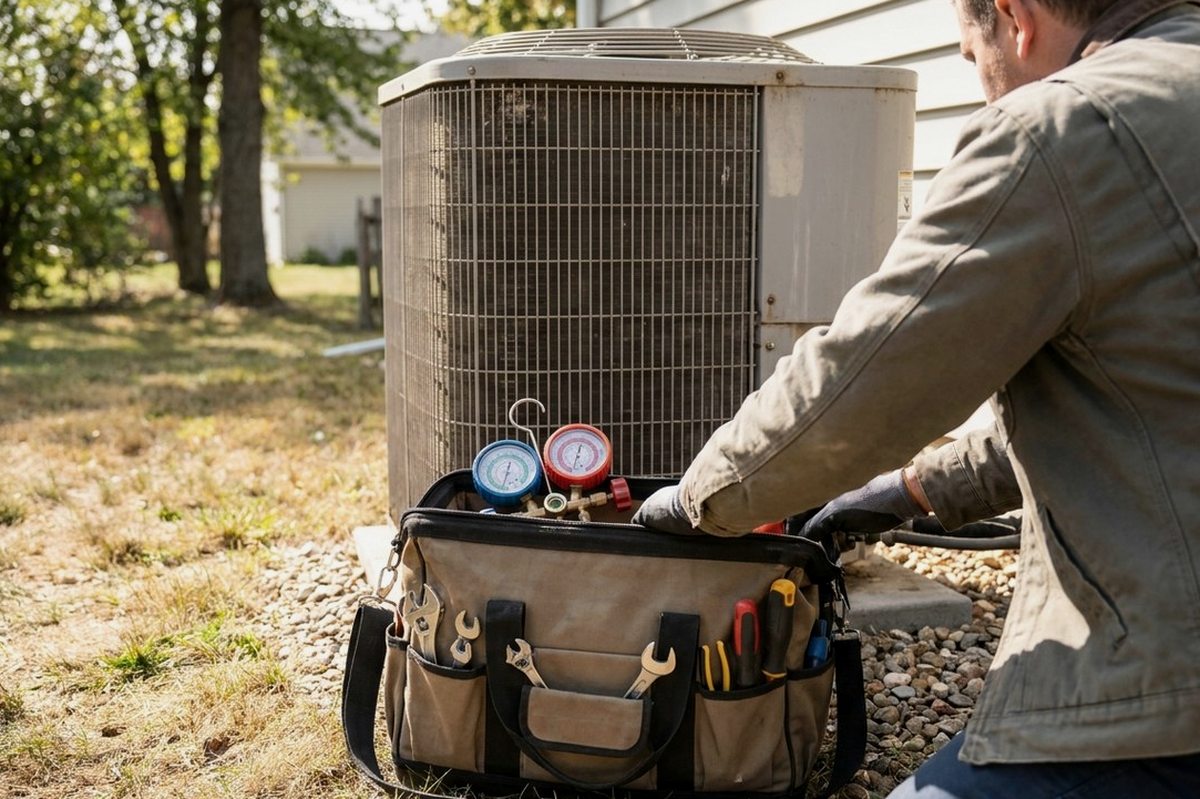
Rock City Air Systems service team · field-reviewed before publishing
What actually decides it: age, fault type, and what is left to work with
Sealing wins when the duct body is sound and the leaks are at the joints, boots and plenum connections. That is most of what we find. Replacement enters the conversation when the material itself has failed: flex duct with a torn inner liner, insulation soaked and matted from years in a hot attic, or old fiberglass ductboard that crumbles when you press it. Age alone does not condemn a duct run. A thirty year old metal trunk in a dry crawlspace can seal up fine. A twelve year old flex run that a roofer stepped on may not. We look at the material and the failure, not the birthday.
Sizing and matching matter more than homeowners expect
Ducts have to match the equipment moving air through them. If somebody put a larger system into a house without touching the ductwork, sealing every joint will not fix the noise, the pressure, or the room that stays warm. The air has nowhere to go. We see this a lot in mid-century homes where the original system was replaced twice and the trunk line never changed. Same story with returns. Plenty of houses have one undersized return doing the work of two. Sealing a starved system just makes it a tighter starved system, so we check static pressure before we recommend tape and mastic.
How we think about it on a visit
We start in the attic or crawlspace with a light and our hands. We look for disconnected boots, gaps at the plenum, kinked flex, and insulation that has slumped off the top of a run. Then we check the rooms you complained about and compare airflow to the rest of the house. If the problem is three bad connections and a plenum gap, that is a repair and we will say so. If we find the liner shredded inside a dozen runs, patching one section buys you a season. We would rather tell you what we found and let you decide with the whole picture in front of you.
Honest cases where replacement wins
Replacement is the right call when the inner liner has torn and the airstream is running through raw insulation, when ductboard has degraded to the point that fasteners will not hold, or when the layout is wrong for the equipment and no amount of sealing changes the math. Water damage counts too. A run that sat wet after a roof leak or a flooded crawlspace should come out rather than get sealed shut with whatever grew inside it. We also replace when a run has been patched three times already. There is a point where repairs stop being cheaper than doing it once.
What sealing does well, and what it does not fix
Good sealing at the joints cuts the air you are losing into an attic that runs punishing in July across the region. It usually helps the far room, drops dust coming through the system, and takes some load off the equipment. What it will not do is fix an undersized return, a crushed run behind a wall, or a system that was never balanced. It also will not solve a humidity problem on its own, though tightening leaks in a humid climate does help the system pull moisture instead of chasing attic air. Straight answer on a visit beats a guess from the driveway.
Duct Sealing or Duct Replacement — common questions
Can I just seal the ducts I can see and leave the rest?
You can, and it often helps. Accessible joints in an attic or crawlspace are usually where most of the loss happens. Runs buried in walls or slabs are a different job, so we tell you what we can reach.
Will sealing my ducts fix the hot room upstairs?
Sometimes. If that room is fed by a leaking or disconnected run, sealing fixes it. If the duct is undersized, kinked, or too long for the airflow available, sealing helps a little and does not solve it.
How do I know if my flex duct liner is torn?
You usually cannot see it from outside because the outer jacket looks fine. We check by feel and by inspecting inside the run. Weak airflow at one register with no visible leak is a common sign.
How it works
- Step 1
Tell us the symptom
Call or fill out the quote form and describe what the system is doing. Warm air, short cycling, water on the floor, a smell, a noise. That detail tells us what parts to load on the truck.
- Step 2
We diagnose on site
A technician checks the thermostat, the electrical side, airflow through the filter and coil, refrigerant behaviour and the ductwork. You hear what we found in plain language before anything gets replaced or repaired.
- Step 3
You approve the fix
We explain the repair, what it costs and what happens if you wait a season. Nothing gets done without your go-ahead, and we tell you honestly when a repair no longer makes sense.
- A real person answers
- Open 7 days
- Written quote before work starts
Why homeowners call us
- We know humid-climate systemsAcross the region the real enemy is moisture. Systems here run long hours pulling water out of the air, and that shows up as frozen coils, clogged drains and mildew smells. We diagnose for humidity, not just temperature.
- Mixed gas and heat pump workPlenty of homes we visit run a heat pump with gas backup, and the two have to hand off cleanly. We troubleshoot both sides, including defrost boards, reversing valves, ignitors and heat exchanger concerns.
- Attic ductwork is our daily breadMid-century homes often have ducts running through attics that hit brutal temperatures. Crushed runs, disconnected boots and leaking joints steal cooling before it reaches the room. We find them instead of blaming the equipment.
- Repair before replaceA capacitor, a contactor, a blower motor or a clogged drain line fixes a lot of the calls we take. We would rather fix what you have and tell you plainly when the numbers stop working.
- All major brands, gas & electricFrom Carrier and Trane to Lennox, Goodman, Rheem and Bryant, serviced independently.
- Straight answersNot worth fixing? We say that out loud, and often it saves you the visit fee.
About this guide
Checked everything on the list and it still acts up?
Mention which checks you ran when you book; it speeds up the visit.
- A real person answers
- Open 7 days
- Written quotes
- All major brands
- Gas & electric
Rather not call? Get a free quote →