
Top-rated independent heating and cooling across central Arkansas and the Arkansas River Valley
Furnace Repairs Worth Paying For
Your furnace quit on a cold morning, and now you are staring at a repair decision you did not ask for. Is it worth fixing, or are you throwing good money at a unit that is done? We do heating repair across Arkansas, Louisiana, Missouri, Mississippi, Oklahoma, Tennessee and Texas, and here is how we actually think it through with homeowners.
Call (888) 365-6280- A real person answers
- Open 7 days
- Written quote before work starts
Taking calls until 5:00 PM CT
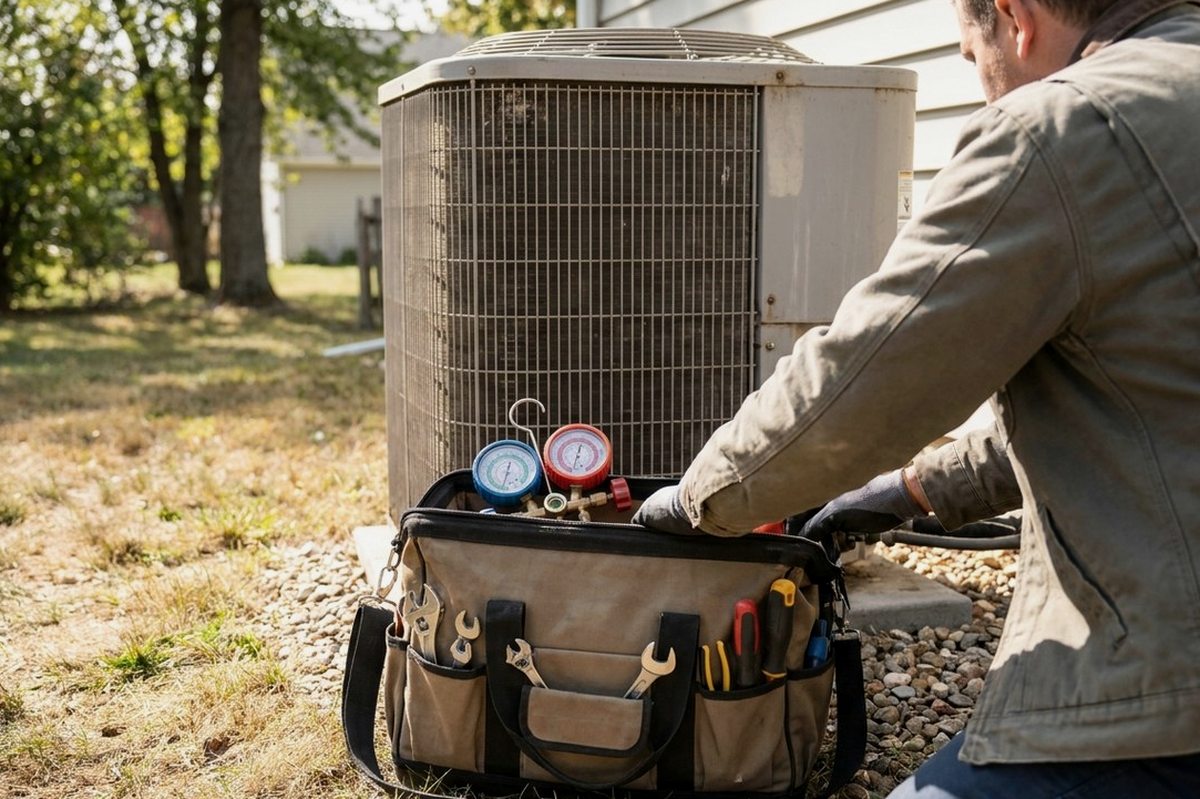
Rock City Air Systems service team · field-reviewed before publishing
Start With Age and What Actually Failed
Two things decide most of it: how old the furnace is, and which part broke. A young furnace with a bad igniter, flame sensor, pressure switch or blower capacitor is worth repairing almost every time. Those are common wear parts and the rest of the unit still has life in it. An older furnace with a cracked heat exchanger or a failed sealed combustion component is a different conversation, because the expensive part is the part that defines the furnace. We tell you which category you are in before you decide anything, and we say it plainly.
Parts Availability Is a Real Factor
Some furnaces are easy to keep running for years because the parts are still stocked across the region. Others use control boards or inducer assemblies that have been discontinued, and the substitute is either backordered or does not exist. If we can get the part in a reasonable time, repair usually makes sense. If you would sit without heat waiting on a board that may never ship, that changes the math. We check availability during the visit rather than guessing, so you are choosing between real options instead of maybes.
Matching, Ducts and the Rest of the System
A furnace does not work alone. In a lot of older homes the ducts run through a hot attic, the return is undersized, and the air conditioning side shares the same blower. If the AC coil is also failing, or the furnace was never matched to the cooling equipment, replacing one half can leave you with a system that never balances. We look at the whole picture: blower condition, duct leakage, whether you are on gas heat or a heat pump with backup, and how the two halves are paired. Sometimes that pushes toward repair now and a planned replacement later.
How We Think About It On the Visit
We diagnose first, then talk. That means finding the actual fault instead of swapping parts, checking the heat exchanger, testing safeties and looking at how the unit has been running. Then we lay out what the repair involves, what else looks close to failing, and what we would expect over the next couple of seasons. If a repair gets you through and we believe it will hold, we say so. If we think you will be calling again in a few months for the same furnace, we say that too. You make the call with the facts, not pressure.
Honest Cases Where Replacement Wins
There are situations where we will not recommend a repair. A cracked or rusted-through heat exchanger on an old furnace is a combustion safety issue and we shut it down. Repeated failures across different components usually mean the unit is at the end of its service life. A furnace with a discontinued core part and no substitute is a dead end. And if the unit is badly oversized for the house, keeps short cycling and cannot handle river valley humidity through the shoulder seasons, replacement fixes the comfort problem that repair never will. We would rather tell you now than after you have paid twice.
If You Ever Smell Gas or Suspect Carbon Monoxide
Leave the building immediately, take everyone with you, and call 911 or your gas utility from outside. Do not flip switches, do not restart the furnace, and do not go back in to check anything. Once the utility has made the property safe, call us and we will handle the furnace repair side, including inspecting the heat exchanger and combustion. If your carbon monoxide alarm sounds, treat it the same way and get outside first. Working alarms on every level are the cheapest protection in the house, and we would rather you replace batteries than gamble.
Furnace Repairs Worth Paying For — common questions
How old is too old for a furnace?
There is no hard cutoff. Age matters mostly in combination with the fault. A cheap wear part on an older unit can still be worth fixing. An expensive core component on the same unit usually is not.
Can you tell me over the phone whether to repair or replace?
Not honestly. We need to see which part failed, check the heat exchanger and safeties, and confirm parts availability. We give you the repair-or-replace answer during the visit, once we know what is actually wrong.
Should I replace the AC at the same time?
Only if it makes sense for your system. If the cooling side is also failing or the two halves were never matched, doing both together avoids a mismatch. If your AC is healthy, leave it alone.
How it works
- Step 1
Tell us the symptom
Call or fill out the quote form and describe what the system is doing. Warm air, short cycling, water on the floor, a smell, a noise. That detail tells us what parts to load on the truck.
- Step 2
We diagnose on site
A technician checks the thermostat, the electrical side, airflow through the filter and coil, refrigerant behaviour and the ductwork. You hear what we found in plain language before anything gets replaced or repaired.
- Step 3
You approve the fix
We explain the repair, what it costs and what happens if you wait a season. Nothing gets done without your go-ahead, and we tell you honestly when a repair no longer makes sense.
- A real person answers
- Open 7 days
- Written quote before work starts
Why homeowners call us
- We know humid-climate systemsAcross the region the real enemy is moisture. Systems here run long hours pulling water out of the air, and that shows up as frozen coils, clogged drains and mildew smells. We diagnose for humidity, not just temperature.
- Mixed gas and heat pump workPlenty of homes we visit run a heat pump with gas backup, and the two have to hand off cleanly. We troubleshoot both sides, including defrost boards, reversing valves, ignitors and heat exchanger concerns.
- Attic ductwork is our daily breadMid-century homes often have ducts running through attics that hit brutal temperatures. Crushed runs, disconnected boots and leaking joints steal cooling before it reaches the room. We find them instead of blaming the equipment.
- Repair before replaceA capacitor, a contactor, a blower motor or a clogged drain line fixes a lot of the calls we take. We would rather fix what you have and tell you plainly when the numbers stop working.
- All major brands, gas & electricFrom Carrier and Trane to Lennox, Goodman, Rheem and Bryant, serviced independently.
- Straight answersNot worth fixing? We say that out loud, and often it saves you the visit fee.
About this guide
Safe checks done and it still misbehaves? That's a real fault
Bring your notes from the checks to the call and booking takes no time.
- A real person answers
- Open 7 days
- Written quotes
- All major brands
- Gas & electric
Rather not call? Get a free quote →