
Top-rated independent heating and cooling across central Arkansas and the Arkansas River Valley
Burning Smell From the Vents
You turned the heat on and the house smells like something is burning. Maybe it is dust cooking off a heat exchanger, which is normal in fall. Maybe it is a wire, a motor, or a gas problem, which is not. Here is how to tell the difference in the next two minutes, what to leave alone, and when to call us.
Call (888) 365-6280- A real person answers
- Open 7 days
- Written quote before work starts
Taking calls until 5:00 PM CT
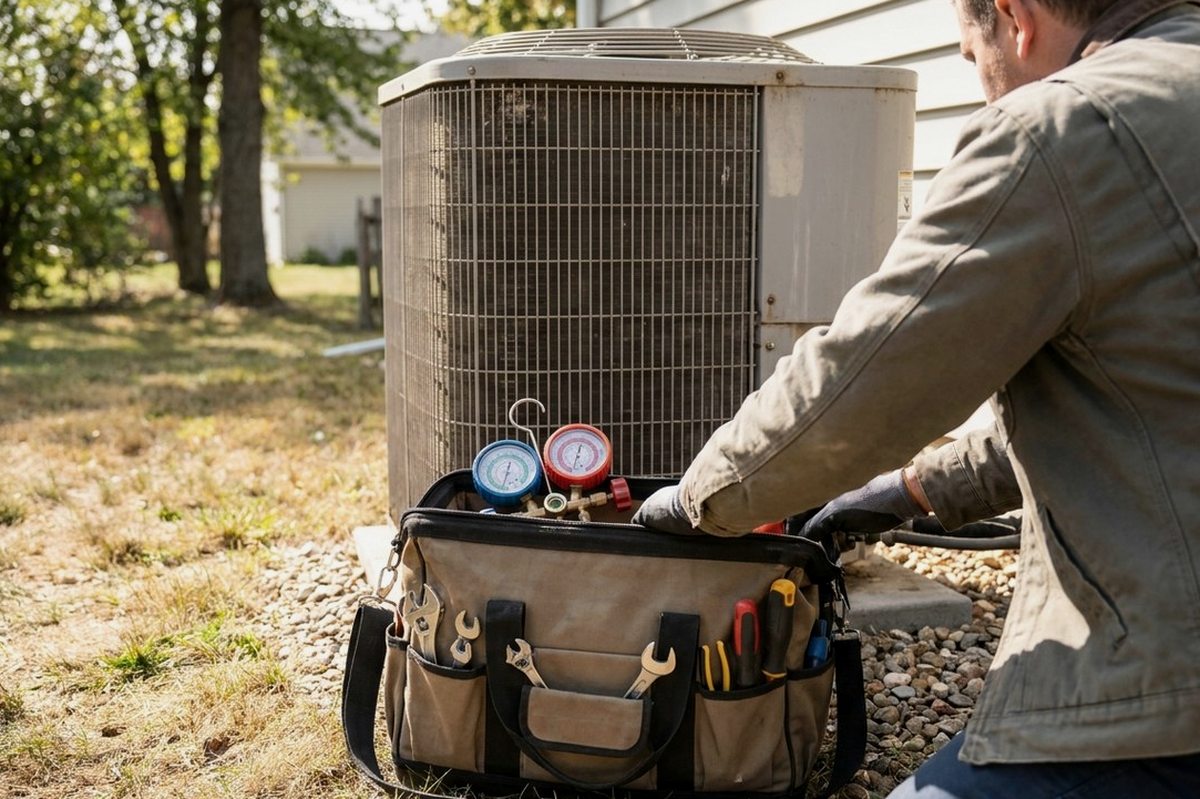
Rock City Air Systems service team · field-reviewed before publishing
First: The Steps That Come Before Anything Else
If you smell gas, rotten eggs, or burning plastic that keeps getting stronger, get everyone out of the house first. 1. Leave the building. Do not stop to shut anything off. 2. From outside, call 911 or your gas utility's emergency line. 3. Do not go back in until they tell you it is safe. 4. Then call us and we will come check the system. Same order applies if a carbon monoxide alarm sounds, even if nobody feels sick. Headache, dizziness, or nausea that clears up outdoors is a serious sign. Treat it as an emergency and let the utility clear the house before we work on the equipment.
Dust Burn-Off: What Normal Actually Smells Like
The first heating cycle of the season often smells like hot dust or a warm iron. Dust settles on the heat exchanger and burner area all summer and cooks off once the system fires. It should be faint, spread evenly through the house, and fade within fifteen or twenty minutes of running. It should not come back on the next cycle. If it does, or if it smells sharp, chemical, or like melting plastic instead of dusty, that is a different problem. Across the region we see this a lot in homes where ducts run through hot attics, because that dust load builds up fast.
What Not to Do While You Wait
Do not relight a pilot, open the furnace cabinet, or poke at burners. Do not reset a breaker over and over to see if the smell comes back, and do not tape over or unplug a carbon monoxide alarm. Do not run the system "just to see" if the smell was strong or plastic-like. Safe things you can do: set the thermostat to off, check that the thermostat has fresh batteries and is on the mode you meant, change a filter that is grey and packed, make sure supply vents are open, and clear leaves or grass clippings away from the outdoor unit. That is the whole list.
Smells That Point to Electrical or Mechanical Trouble
A hot metal or ozone smell, like a pencil sharpener or a model train transformer, usually means a motor is running hot or a winding is failing. Melting plastic points at wiring insulation, a contactor, or a blower wheel dragging. A brief burnt smell followed by the system shutting itself off often means a limit switch did its job because airflow was choked, sometimes by a clogged filter or a collapsed flex duct in the attic. These are all things we test with meters and a look inside the cabinet. Shut the system off at the thermostat and call us rather than running it through more cycles.
When to Call Us and What We Check
Call us if the smell lasts past the first cycle, comes back on the second, smells electrical or chemical, or if the system tripped a breaker or shut down on its own. We handle heating repair and furnace repair on gas equipment and heat pumps, plus air conditioning repair when the burning smell is coming from a blower or condenser motor in summer. On arrival we inspect the heat exchanger, test the blower motor amp draw, check wiring and contactors, verify airflow through the filter and duct runs, and confirm the flue is drawing correctly. We work with homeowners across Arkansas, Louisiana, Missouri, Mississippi, Oklahoma, Tennessee and Texas.
Preventing the Ones You Can Prevent
Most burning smells we chase back to two things: a filter nobody changed and dust that had all summer to settle. Change the filter on a schedule you can actually remember, and check it monthly in dusty months. Before the first cold snap, have us run a heating check so the dust burns off with a technician standing there instead of on a Saturday night. If your ducts run through an attic, ask us to look at insulation and any crushed flex sections, because restricted airflow makes motors run hotter than they should. Homes with both gas heat and a heat pump need both sides checked, not just the one running.
Burning Smell From the Vents — common questions
How long should a burning dust smell last?
Usually fifteen to twenty minutes on the first heating cycle of the season, and it should not return on later cycles. If it lingers longer, comes back, or smells like plastic instead of dust, shut the system off and call us.
My AC smells like it is burning. Is that different?
Yes. In cooling there is no burner, so a burning smell points to the blower motor, the outdoor fan motor, or wiring. Turn the system off at the thermostat and call us for air conditioner repair rather than running it.
Should I open the windows if I smell burning?
If it is faint dust, opening a window is fine. If it smells like gas, chemicals, or melting plastic, do not stay inside to open windows. Leave the house, call 911 or your gas utility from outside, then call us.
How it works
- Step 1
Tell us the symptom
Call or fill out the quote form and describe what the system is doing. Warm air, short cycling, water on the floor, a smell, a noise. That detail tells us what parts to load on the truck.
- Step 2
We diagnose on site
A technician checks the thermostat, the electrical side, airflow through the filter and coil, refrigerant behaviour and the ductwork. You hear what we found in plain language before anything gets replaced or repaired.
- Step 3
You approve the fix
We explain the repair, what it costs and what happens if you wait a season. Nothing gets done without your go-ahead, and we tell you honestly when a repair no longer makes sense.
- A real person answers
- Open 7 days
- Written quote before work starts
Why homeowners call us
- We know humid-climate systemsAcross the region the real enemy is moisture. Systems here run long hours pulling water out of the air, and that shows up as frozen coils, clogged drains and mildew smells. We diagnose for humidity, not just temperature.
- Mixed gas and heat pump workPlenty of homes we visit run a heat pump with gas backup, and the two have to hand off cleanly. We troubleshoot both sides, including defrost boards, reversing valves, ignitors and heat exchanger concerns.
- Attic ductwork is our daily breadMid-century homes often have ducts running through attics that hit brutal temperatures. Crushed runs, disconnected boots and leaking joints steal cooling before it reaches the room. We find them instead of blaming the equipment.
- Repair before replaceA capacitor, a contactor, a blower motor or a clogged drain line fixes a lot of the calls we take. We would rather fix what you have and tell you plainly when the numbers stop working.
- All major brands, gas & electricFrom Carrier and Trane to Lennox, Goodman, Rheem and Bryant, serviced independently.
- Straight answersNot worth fixing? We say that out loud, and often it saves you the visit fee.
About this guide
Past the safe checks, it's a job for tools and a meter
Mention which checks you ran when you book; it speeds up the visit.
- A real person answers
- Open 7 days
- Written quotes
- All major brands
- Gas & electric
Rather not call? Get a free quote →