
Top-rated independent heating and cooling across central Arkansas and the Arkansas River Valley
Cool but Clammy
Your thermostat says 74 and the AC is running, but the air still feels heavy. Sheets feel damp, the bathroom mirror stays foggy, and there's a musty smell near the vents. That's a humidity problem, not a temperature problem, and we fix it across Arkansas, Louisiana, Missouri, Mississippi, Oklahoma, Tennessee and Texas. Here's what causes it and what to check before you call.
Call (888) 365-6280- A real person answers
- Open 7 days
- Written quote before work starts
Taking calls until 5:00 PM CT
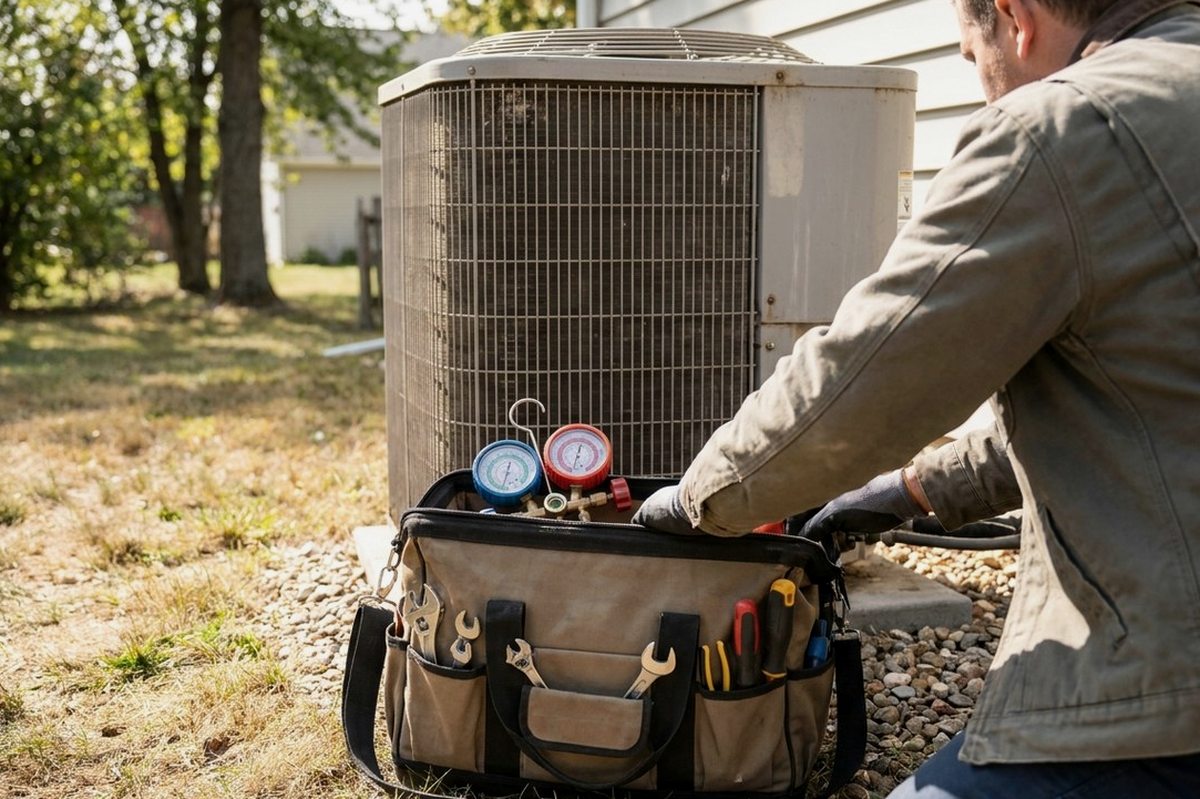
Rock City Air Systems service team · field-reviewed before publishing
What Clammy Air Actually Means
Air conditioning cools two ways. It drops the air temperature, and it pulls water out of the air as that air passes over a cold indoor coil. When the house hits your set temperature but still feels sticky, the second job is not happening well enough. In our part of the country that shows up as indoor humidity sitting above roughly 55 percent, condensation on windows and registers, wood floors cupping, and a damp smell in closets and back bedrooms. The system may be cooling fine on paper while barely dehumidifying. So the fix is usually about airflow, run time and moisture getting in, not about buying a bigger AC.
Cause Family One: Airflow and Filters
This is the cheapest place to start. A loaded filter, a closed-off return, or too many shut registers starves the indoor coil of air, and a starved coil can ice over and stop removing water. On the other side, a blower running too fast pushes air past the coil so quickly it never gives up its moisture. That fan speed is a setting a technician adjusts, not a knob you turn. We also see undersized or crushed flex duct in attics across the region, which chokes the same way a dirty filter does. Change the filter on schedule and open the vents, then see what changes over two or three days.
Cause Family Two: Short Cycling and Oversizing
A system that is too large for the house cools the air fast and shuts off before it has run long enough to wring water out. You get short bursts, cold spots, and a clammy feel everywhere else. The same thing happens when a thermostat is set to a very aggressive swing, or when it sits on an interior wall near a supply register and satisfies early. Longer, steadier run times dehumidify better than short blasts. Some systems support a lower stage or a dehumidification mode that extends run time on humid days. We check actual run times and temperature split before recommending anything, because guessing at capacity is how houses end up worse.
Cause Family Three: Moisture Coming In
Sometimes the equipment is doing its job and the house keeps feeding it water. Common sources are a vented crawl space or damp basement, missing vapor barrier over bare dirt, bath fans that dump into the attic instead of outside, dryer venting problems, and leaky return duct in a hot attic pulling in humid air. That attic return leak is one we find often in mid-century homes with ducts run overhead. Gutters draining next to the foundation and irrigation soaking the slab edge add to it. Sealing return leaks and covering crawl space soil often does more for comfort than any thermostat change.
What You Can Safely Check, and What We Do Differently
Safe for you: change the filter, confirm supply and return vents are open and not blocked by furniture, check the thermostat batteries and that it is set to cool with the fan on AUTO rather than ON, look for a tripped breaker, and clear leaves and grass clippings from around the outdoor unit. Leave refrigerant, gas and high-voltage work alone. If you ever smell gas, get everyone out of the house, call 911 or your gas utility from outside, then call us. On our visit we measure indoor humidity, static pressure, temperature split across the coil, blower speed and refrigerant charge, inspect the coil and drain, and pressure-check duct for leaks. Then we tell you which fix actually moves the number.
When it is time to book
Cool but Clammy — common questions
Should I just turn the thermostat down lower?
Usually not. Setting it lower makes the house colder without removing much more water, and it can make the clammy feeling worse. Longer run times at a normal setting dehumidify better than short, hard cooling cycles.
Will a dehumidifier fix it?
A dehumidifier helps, and a whole-home unit tied into the duct helps a lot. But if the real problem is a leaky attic return or a blower running too fast, you are paying to remove moisture you invited in.
Why are my vents sweating?
Humid air is hitting a cold metal surface. That points to high indoor humidity, missing or wet insulation on duct in the attic, or a return leak. It is worth a look before the moisture damages ceilings.
How it works
- Step 1
Tell us the symptom
Call or fill out the quote form and describe what the system is doing. Warm air, short cycling, water on the floor, a smell, a noise. That detail tells us what parts to load on the truck.
- Step 2
We diagnose on site
A technician checks the thermostat, the electrical side, airflow through the filter and coil, refrigerant behaviour and the ductwork. You hear what we found in plain language before anything gets replaced or repaired.
- Step 3
You approve the fix
We explain the repair, what it costs and what happens if you wait a season. Nothing gets done without your go-ahead, and we tell you honestly when a repair no longer makes sense.
- A real person answers
- Open 7 days
- Written quote before work starts
Why homeowners call us
- We know humid-climate systemsAcross the region the real enemy is moisture. Systems here run long hours pulling water out of the air, and that shows up as frozen coils, clogged drains and mildew smells. We diagnose for humidity, not just temperature.
- Mixed gas and heat pump workPlenty of homes we visit run a heat pump with gas backup, and the two have to hand off cleanly. We troubleshoot both sides, including defrost boards, reversing valves, ignitors and heat exchanger concerns.
- Attic ductwork is our daily breadMid-century homes often have ducts running through attics that hit brutal temperatures. Crushed runs, disconnected boots and leaking joints steal cooling before it reaches the room. We find them instead of blaming the equipment.
- Repair before replaceA capacitor, a contactor, a blower motor or a clogged drain line fixes a lot of the calls we take. We would rather fix what you have and tell you plainly when the numbers stop working.
- All major brands, gas & electricFrom Carrier and Trane to Lennox, Goodman, Rheem and Bryant, serviced independently.
- Straight answersNot worth fixing? We say that out loud, and often it saves you the visit fee.
About this guide
Safe checks done and it still misbehaves? That's a real fault
Mention which checks you ran when you book; it speeds up the visit.
- A real person answers
- Open 7 days
- Written quotes
- All major brands
- Gas & electric
Rather not call? Get a free quote →