
Top-rated independent heating and cooling across central Arkansas and the Arkansas River Valley
The Condensate Line
Your AC pulls water out of the air all summer, and that water has to go somewhere. The condensate line is the pipe that carries it out. When it clogs, water backs up into the drain pan, then onto the closet floor or through the ceiling below. We fix that across Arkansas, Louisiana, Missouri, Mississippi, Oklahoma, Tennessee and Texas, and most of it is preventable.
Call (888) 365-6280- A real person answers
- Open 7 days
- Written quote before work starts
Taking calls until 5:00 PM CT
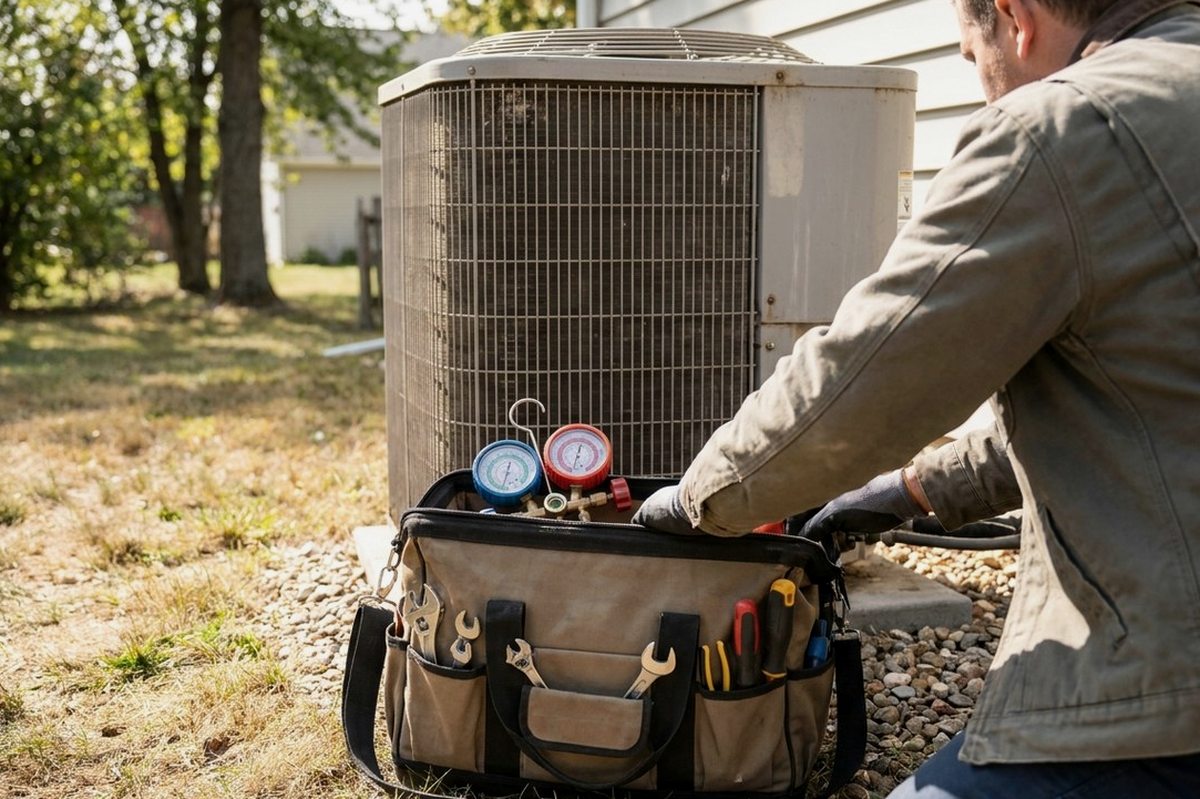
Rock City Air Systems service team · field-reviewed before publishing
What Neglect Actually Does Over Time
A condensate line does not clog overnight. Dust from the return, plus the damp inside of the pipe, grows a slimy film that thickens season after season. Humidity across the region keeps that line wet for months at a stretch, so the buildup never dries out and flakes off. Eventually the drain slows, water sits in the pan, and the pan rusts or overflows. If your air handler is in the attic, that water finds the drywall below it. We have opened ceilings under attic units where the only problem was a pipe the width of a garden hose full of sludge.
The Simple Habit That Prevents It
Pour a cup of distilled white vinegar down the access opening on the condensate line, then let it sit. That opening is usually a capped tee near the indoor unit. Vinegar breaks down the biological film that causes most clogs, and it will not eat the PVC. Skip bleach. It is harder on the pipe and on any metal it touches on the way out. While you are there, look at the drain pan. If there is standing water in it with the system running, the line is already slow and you want us to look before it overflows. Also change your filter, since less dust in means less sludge later.
How Often To Do It
Once a month during cooling season is the habit we recommend, and in the humid parts of Louisiana, Mississippi and east Texas we would not stretch it past that. Your system can pull gallons of water a day in August, so the line stays busy. In winter, a gas furnace with no cooling running produces no condensate, so you can pause. High-efficiency condensing furnaces do drain in winter and should be treated year-round. Tie it to something you already do monthly, like checking the filter, and it takes two minutes. That is cheaper and quieter than a ceiling repair.
Warning Signs It Is Already Too Late
Water stains on the ceiling under an attic air handler, a musty smell from the vents, or a puddle at the base of an indoor closet unit all point to a backed-up line. Many systems have a float switch that shuts the AC off when the pan fills, so cooling that quits on a hot afternoon with no other symptom is worth a look at the drain. Gurgling from the pipe means partial blockage. If you see any of these, turn the system off at the thermostat to stop making more water and call us for air conditioning repair before the damage spreads.
What We Do On A Service Call
We clear the line with a vacuum from the outside termination, flush it from the access tee, and check that the water actually runs out where it should. Then we look at why it clogged. A line with no slope, a termination buried in mulch, a missing trap, or an undersized pipe will clog again no matter how often you pour vinegar. We check the float switch works, inspect the pan for rust-through, and confirm the secondary drain is open. If the pan is failing, we will tell you plainly rather than patch it and leave.
When it is time to book
The Condensate Line — common questions
Can I use bleach in my condensate line?
We would rather you use distilled white vinegar. Bleach is harsh on PVC glue joints and on any metal it contacts, including the drain pan and coil, and it can leave a smell that gets pulled into the ducts.
Why does my AC shut off on hot days but restart later?
Often a float switch in the drain pan. Water backs up, the switch cuts cooling to prevent ceiling damage, then the level drops and the system restarts. It is a symptom of a clogged line, not a thermostat problem.
Does my line need attention in winter?
A standard gas furnace makes no condensate, so no. A high-efficiency condensing furnace drains all winter and does need the same monthly flush. Heat pumps in defrost also shed water outdoors. Ask us which you have.
How it works
- Step 1
Tell us the symptom
Call or fill out the quote form and describe what the system is doing. Warm air, short cycling, water on the floor, a smell, a noise. That detail tells us what parts to load on the truck.
- Step 2
We diagnose on site
A technician checks the thermostat, the electrical side, airflow through the filter and coil, refrigerant behaviour and the ductwork. You hear what we found in plain language before anything gets replaced or repaired.
- Step 3
You approve the fix
We explain the repair, what it costs and what happens if you wait a season. Nothing gets done without your go-ahead, and we tell you honestly when a repair no longer makes sense.
- A real person answers
- Open 7 days
- Written quote before work starts
Why homeowners call us
- We know humid-climate systemsAcross the region the real enemy is moisture. Systems here run long hours pulling water out of the air, and that shows up as frozen coils, clogged drains and mildew smells. We diagnose for humidity, not just temperature.
- Mixed gas and heat pump workPlenty of homes we visit run a heat pump with gas backup, and the two have to hand off cleanly. We troubleshoot both sides, including defrost boards, reversing valves, ignitors and heat exchanger concerns.
- Attic ductwork is our daily breadMid-century homes often have ducts running through attics that hit brutal temperatures. Crushed runs, disconnected boots and leaking joints steal cooling before it reaches the room. We find them instead of blaming the equipment.
- Repair before replaceA capacitor, a contactor, a blower motor or a clogged drain line fixes a lot of the calls we take. We would rather fix what you have and tell you plainly when the numbers stop working.
- All major brands, gas & electricFrom Carrier and Trane to Lennox, Goodman, Rheem and Bryant, serviced independently.
- Straight answersNot worth fixing? We say that out loud, and often it saves you the visit fee.
About this guide
Past the safe checks, it's a job for tools and a meter
Mention which checks you ran when you book; it speeds up the visit.
- A real person answers
- Open 7 days
- Written quotes
- All major brands
- Gas & electric
Rather not call? Get a free quote →